Taurus Red Flags 2026: 5 Patterns to Notice and What to Do Next
You type that something hurt, then delete the sentence because you already know how difficult the evening might become. If that feels familiar, the issue is more than whether someone is a stubborn Taurus. This Taurus red flags 2026 guide looks at the behavior, its impact, and the next step you can safely take.
Quick Answer
Taurus red flags 2026 should be assessed as repeated behavior, not a verdict on a zodiac sign. Watch for unresolved withdrawal, unequal control, persistent vagueness about shared expectations, punishment for boundaries, and one-sided repair. A slow reply, a quiet personality, or needing time alone is not enough to establish any of those patterns. Name the specific concern if it is safe, set a boundary you control, and notice what happens next. If you feel threatened or afraid, prioritize safety and trusted support rather than waiting for a horoscope or a calmer conversation.
At a Glance
- Not Automatically a Red Flag Needing time, preferring routine, saying no, or having different social habits. Context and how boundaries are treated matter.
- Worth Taking Seriously Repeated agreements are ignored, your choices become smaller, or honest concerns lead to intimidation rather than discussion.
- Your First Question "What happened, what effect did it have, and can I raise it without being punished or frightened?"
In This Guide
- What counts as a concern, beyond the sign
- Five patterns and their practical meaning
- What quiet behavior does not establish
- Set a boundary based on your own action
- When not to wait for another test
- An optional boundary reminder
- Choose for your own intention
- Questions about Taurus red flags
- A brief boundary check
Taurus Red Flags 2026: Judge the Pattern, Not the Birthday
Taurus symbolism often emphasizes steadiness and attachment to the familiar. It does not establish whether someone is trustworthy, controlling, kind, or willing to take responsibility. Nor does the year make a behavior more or less acceptable.
A useful distinction is whether a difference can be discussed. One person can dislike a sudden change of plan and still respect the other's choice. A refusal to accept any choice outside their preference is a different issue.
Start with what you have actually experienced. You do not need a label, a diagnosis, or proof that a person meant to hurt you before deciding an arrangement is not working.
Five Taurus Red Flags to Check Against Actual Behavior
These patterns can occur with any sign. They are prompts for observation, not a checklist that diagnoses a person from one incident.
Silence That Leaves the Issue Permanently Unanswered
You raise a concern, contact drops, and days later things resume as though you never spoke.
A stated break can be reasonable. The concern is a repeated pattern with no agreed return and no way to discuss the original issue. If safe, ask when you can finish the conversation rather than repeatedly chasing it.
Control Presented as Being Practical
Your friends, clothes, spending, or schedule require approval, but the rules do not apply equally.
Ask whether this is a freely negotiated agreement or a restriction you cannot refuse. Intimidation, surveillance, and threats are not a preference for routine.
Repeated Vagueness About an Agreement You Need
You are expected to behave like a committed partner while an ordinary question about exclusivity never gets answered.
Ask the question plainly and decide what arrangement you are willing to participate in. You do not need to prove someone's motive before declining indefinite uncertainty.
Warmth That Becomes Conditional on Your Compliance
Everything feels affectionate until you disagree, then you are pressured to take back a reasonable boundary.
Someone being upset is not automatically manipulation. Notice whether you can still say no, maintain privacy, and make your own choices without punishment or fear.
Repair That Is Always Your Job
You start every conversation, explain both sides, apologize first, and write the plan for what happens next.
An apology means more when responsibility and follow-through are shared. Stop measuring progress only by how carefully you manage the other person's reaction.
A Late Reply Is Not Enough to Tell You Why Someone Is Quiet
A person can be tired, occupied, overwhelmed, or simply unable to talk. They may also choose not to continue a relationship. None of those possibilities should be filled in from a sign description.
If you are in an ongoing relationship, a useful question is whether there is a shared way to take space and return to unresolved matters. "I need tonight to myself; can we talk tomorrow?" is different from a pattern where raising any issue makes it vanish indefinitely.
If someone has ended the relationship or asked for no contact, their silence is not a challenge to overcome. Respect the boundary even while you are hurt.
Set a Boundary You Can Actually Keep
A request asks what the other person is willing to do. A boundary describes your own participation. "Can we agree a time to finish this conversation?" is a request. "I will pause this conversation if I am being insulted" describes an action you control.
For ordinary disagreement, choose one clear example rather than presenting a personality case: "When the plan changed and I was not told, I waited for an hour. I need us to update each other." Then ask whether the agreement is realistic for both people.
Notice what changes in practice. Does your partner acknowledge the event, offer their perspective without denying yours, and take part in the next agreement? A softer evening is welcome, but it does not by itself resolve a repeated issue.
If you keep feeling responsible for every repair, read why your relationship may not be working . The CU Boulder relationship guide also distinguishes respectful disagreement from controlling or demeaning conduct.
You Do Not Have to Wait Weeks to Take Fear Seriously
If there are threats, stalking, coercion, intimidation, or fear of retaliation, a communication experiment is not the priority. Seek trusted, appropriate support and consider your safety before confronting the person. You do not need to wait for a pattern to become more obvious.
If the issue is not danger but emotional wear, give yourself time away from interpreting the relationship. A meal with a friend or an evening with the chat put aside will not answer every question, but it may give you room to hear your own preference. Feeling grounded again is about returning to your own routine, not making yourself tolerate more.
Keep the Reminder Separate From the Safety Decision
For everyday habits such as checking your availability or remembering a privacy boundary, a cue can be useful. It should never be confused with safety planning or protection from another person's behavior.
Our bracelet for protection guide uses protection symbolically for personal limits. If your focus is recovery after a difficult period, see the healing bracelet guide . The bracelet chooser compares intentions; it does not decide whether a relationship is safe.
A Reminder of the Limit You Already Chose
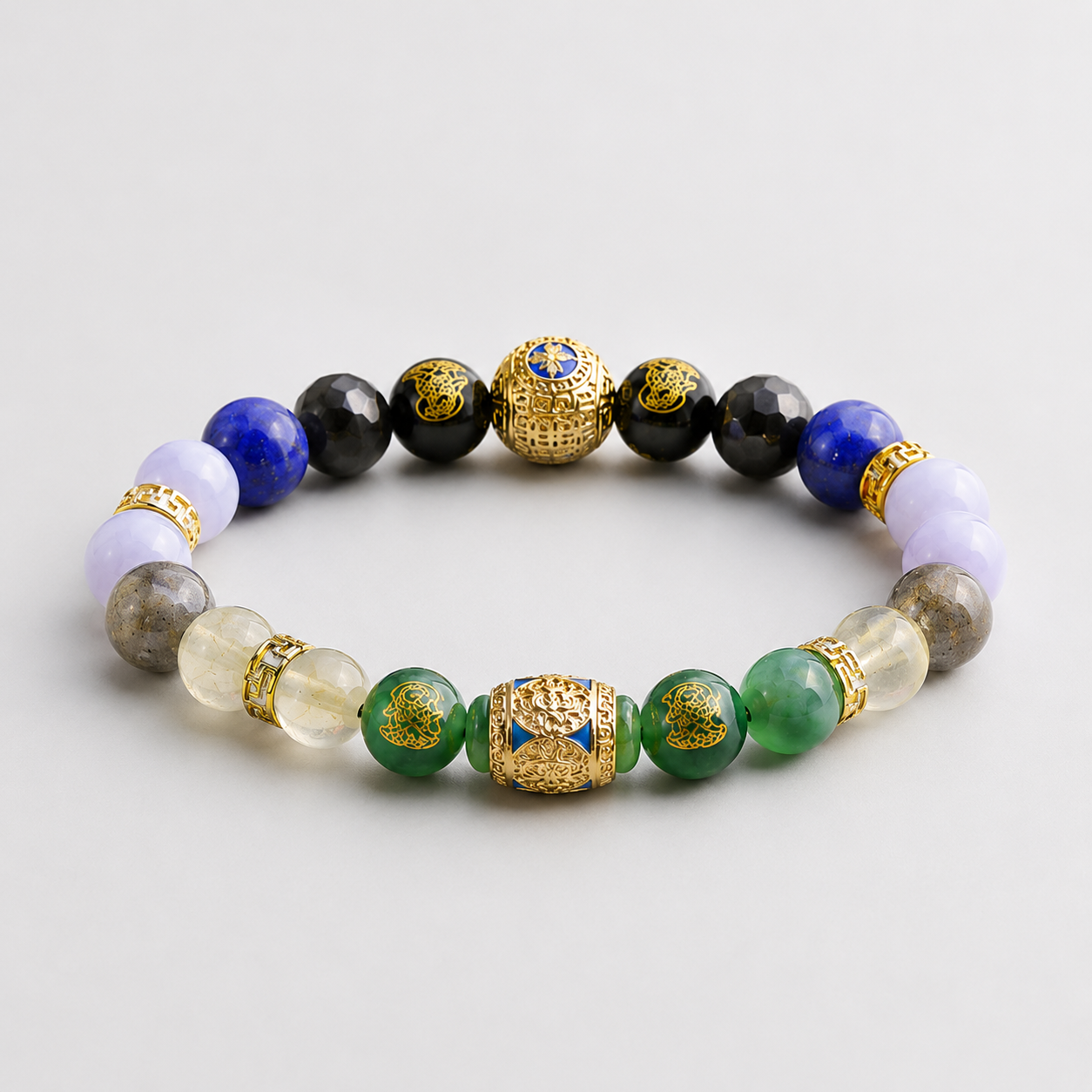
If you want a piece of jewelry to mark an everyday boundary you have already chosen, one symbolic option is the Protection Bracelet .

Let it remind you of a specific sentence, such as "I will check my schedule before agreeing." It does not shield you from harm, change a partner, or make a difficult relationship safe.
View Protection Bracelet DetailsPersonal Options, Not a Fix for Someone Else
Choose for the wearer and their own intention. No one needs to buy jewelry because a relationship raises concerns.
Healing Bracelet
For someone rebuilding their own routines after a draining period. Its meaning is personal; it is not a treatment or a promise to remove hurt.
View Bracelet Details
Taurus Crystal Bracelet
If you are the Taurus reflecting on your own behavior, this can mark an intention to hear a no, return to a conversation, and follow through. The responsibility is in the action, not the stone.
View Bracelet DetailsTaurus Red Flags 2026: Reader Questions
This article provides no evidence for that claim. Assess a person's behavior, not a population by birth sign.
Not by itself. Consider whether the break is communicated, boundaries are respected, and there is a workable way to return to the issue.
No. You can name an impact, make a request, and decide what you are willing to participate in without establishing a hidden motive.
There is no universal period. For ordinary disagreements, discuss a realistic review point. If you feel unsafe, do not wait for another incident to seek support.
It cannot provide physical safety or prevent abusive behavior. The product here is an optional symbol for everyday boundaries, not a safety measure.
A Brief Boundary Check
Use what happened rather than a sign label or diagnosis.
If you fear retaliation, seek trusted support instead of treating confrontation as a required step.
Make the desired change specific enough for both people to understand.
Choose what you will do if the arrangement remains unacceptable; do not rely on controlling their response.
A note or bracelet can cue a chosen boundary. Keep safety decisions separate from jewelry or rituals.
Further Reading & Symbolic Context
These sources support the discussion of communication and boundaries. They do not diagnose a person or validate zodiac-based risk claims.
CU Boulder: Building Strong Relationships provides examples of communication and boundary red flags.
UT Austin: Healthy Relationships discusses respect, accountability, and keeping personal boundaries.
Explore Your Path
Three ways to understand your timing, patterns and next steps — through Eastern destiny, Western astrology and Tarot guidance.
 3-Card Guidance
Tarot Reading
Ask one question and receive a focused three-card reading for the past, present and advice.
Start a Reading → Western Astrology
Astrology Calculator
See your birth chart, core patterns, personal energy and current timing in one place.
Read My Chart → Eastern Destiny · Preview
Bazi Calculator
The calculator is temporarily unavailable. Preview its Four Pillars and Five Elements reading approach while the experience is being refined.
View Bazi Preview → AstroAndCharm
Stay Connected
Follow AstroAndCharm for zodiac insights, Tarot guidance, Bazi, crystal meanings and new tools.