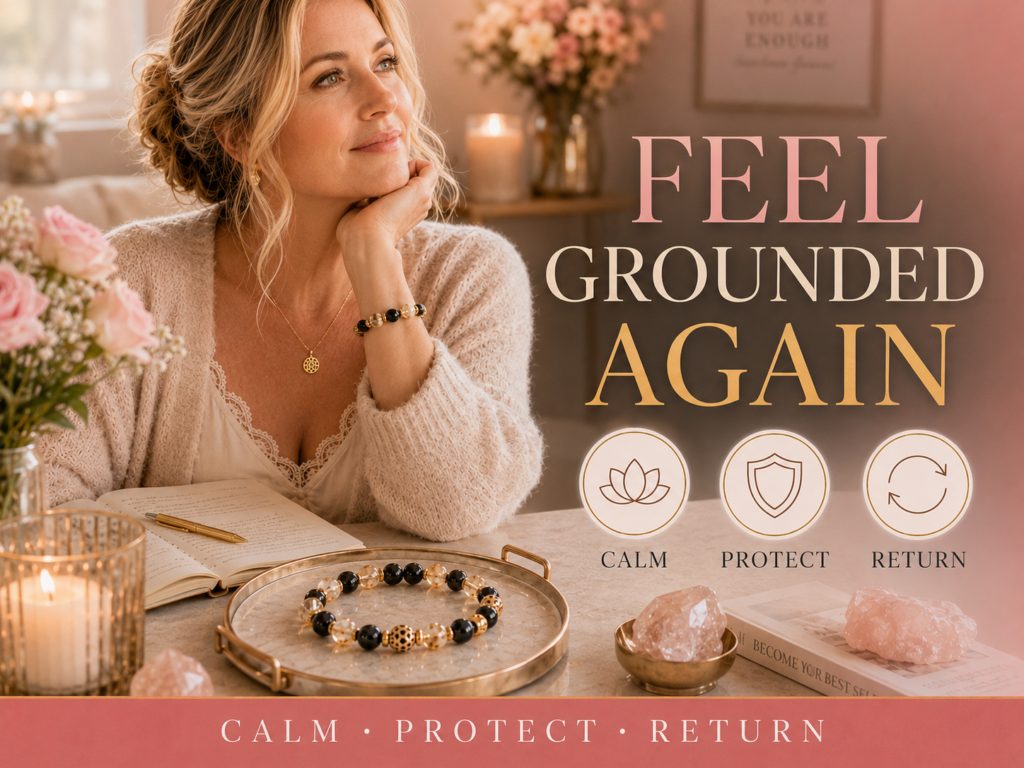
How to Feel Grounded Again: How to Stay Calm in Stressful Environments and Feel Safe in Your Own Energy
If your energy has felt shaky, heavy, or too easy to throw off lately, grounding usually does not come back through one vague mindset shift. It comes back when your body feels safer, your boundaries get cleaner, and the people or environments draining you stop getting so much access.
Quick Answer
How to feel grounded again usually starts with five practical moves: reduce the strongest drain, slow your body before you analyze your feelings, stop staying too open in stressful environments, rebuild emotional safety through smaller cleaner boundaries, and use one steady ritual cue so your center comes back faster when life starts pulling you outward again. Grounding is not only calm. It is the feeling that you belong back inside yourself.
At a Glance
- What Usually Knocks Grounding Out The fastest leaks are stressful environments, too much access for draining people, emotional overload without recovery, and the habit of staying outwardly available long after your body has already tightened up.
- What Usually Helps Most Grounding usually returns through less exposure, slower breathing, better exits, more physical reset after pressure, and stronger emotional boundaries around what gets to stay inside you.
- Best Next Step If the pattern clearly gets worse around people, conflict, or heavy spaces, start with bracelet for protection. If the environment is gone but you still feel worn down and disconnected from yourself, use bracelet for healing. If you still cannot tell what type of support fits, go to which bracelet should I wear.
In This Guide
Why Grounding Disappears in the First Place
If you keep searching how to feel grounded again, the issue is usually not that you forgot one perfect calming trick. It is more often that too much of your attention, emotion, and body energy has been pulled outward for too long. You stop feeling centered because too much of you is still tracking pressure, moods, conflict, noise, or unfinished stress.
That is why feeling ungrounded can show up as several different things at once. You feel heavier than usual. You react faster. Your breathing changes. Your focus gets less stable. Your body feels present, but your center does not.
You Are Staying in Stressful Environments Too Long
Your body often loses grounding before your mind names the environmentRooms with tension, noise, instability, emotional unpredictability, or too much social pressure make it harder to stay steady. The longer you stay, the more your system starts adapting around stress instead of around safety.
You Keep Absorbing More Than You Realize
Other people's moods keep living inside you after the contact endsThis is why some people stop feeling like themselves after one conversation, one visit, or one tense interaction. The exposure is over, but the residue is still active.
Your Recovery Routine Is Too Weak for the Pressure You Are Under
The system never really closes before the next demand beginsIf every stressful interaction is followed by more screens, more noise, more decisions, or more emotional labor, your system never gets enough time to settle back into itself.
You No Longer Feel Fully Safe Inside Your Own Boundaries
Too much access has made your center less solidThis often happens when you keep being available, agreeable, or emotionally open after your body has already signaled enough. Grounding weakens when limits stay theoretical instead of real.
How to Stay Calm in Stressful Environments
If you want to stay calm in stressful environments, do not make your first goal “feel peaceful no matter what.” Make your first goal “reduce what your body has to fight.” Calm comes more easily when the system stops having to defend against so much at once.
- Lower the exposure load before you need rescue. Sit near an exit, shorten the visit, take breaks, and avoid stacking two draining environments back to back.
- Slow the body first. Put both feet down, unclench your jaw, and lengthen the exhale before trying to “think positively.” This matters because grounding returns faster through the body than through forced mindset.
- Stop trying to monitor everyone in the room. The more you track every mood and shift, the faster your energy leaves you. Calm improves when your attention comes back to your own body.
- Do not solve the whole atmosphere. If the room is tense, let it be tense without making yourself the regulator for everyone inside it.
- Leave before you are fully dysregulated. A cleaner earlier exit usually protects more than a brave delayed one.
Stressful spaces feel bigger when your system believes it has to absorb the whole room. Grounding starts returning when that false job ends.
How to Stop Feeling Drained Around People
If your grounding drops most around people, the question is not only how to calm down. It is how to stop leaking so much energy in the first place.
Start by tracking who leaves you more solid, about the same, or less like yourself. That one test is more useful than general self-diagnosis. If someone repeatedly leaves you mentally noisy, guilty, scattered, or oddly tired, the problem is no longer abstract.
Then cut one access point. Shorten the call. Reply later. Stop offering emotional labor you do not actually have. Grounding improves faster when less of you is still being pulled toward someone else's instability.
What to Do When Your Energy Feels Heavy
Heavy energy often feels vague until you interrupt it physically. That is why the first useful move is rarely more analysis. It is a concrete reset.
Walk outside. Shower. Eat something steady. Drink water. Sit in silence. Put your phone away for fifteen minutes. Open a window. Clean one small space. These actions sound ordinary because they are. That is also why they work. They tell the body it can come back to the present instead of staying half-inside the last pressure wave.
If you want to ground your energy, use a simple rule: do one body-based reset before you make one meaning-based conclusion. The order matters. A loaded system tells worse stories.
How to Feel Emotionally Safe Again
Emotional safety usually does not return all at once. It returns through repeated evidence that you can notice discomfort, respond earlier, and protect your center without abandoning yourself.
That means fewer overlong explanations, fewer forced yeses, fewer “it is fine” moments when your body is already shrinking. It means trusting the early signal instead of waiting until the crash proves it.
Guidance from Harvard Health on stress, WebMD on stress effects, and Psychology Today on boundaries all point toward the same practical truth: when overload stays high and boundaries stay weak, calm and safety get harder to hold. Grounding grows where pressure stops having unlimited access.
Where the Protection Bracelet Fits
For this keyword, the Protection Bracelet is the strongest main fit because the problem usually centers on staying calm in stressful environments, feeling less thrown off by other people, and rebuilding a sense of safety and containment inside your own energy.
That does not mean every ungrounded season is only a protection issue. But if your center keeps collapsing around pressure, moods, rooms, or social overstimulation, protection is usually the first cleaner path.
A Better Fit When Grounding Breaks Most Around Pressure
Protection Bracelet
If feeling grounded again is really about less social drain, cleaner boundaries, and more steadiness in tense environments, start with the Protection Bracelet. Use it before the environment, during the interaction, or right after contact as a ritual cue to come back to yourself faster.
 See the Protection Bracelet Details
Which Support Path Makes Sense Next?
If your grounding breaks mostly around conflict, people, pressure, or heavy environments, go to bracelet for protection. If the environment is already gone but you still feel soft, depleted, and disconnected from yourself, use bracelet for healing. If you still cannot tell whether the real issue is protection, healing, love, money, or luck, use which bracelet should I wear before choosing anything.
The goal is not to choose the broadest answer. It is to choose the path that matches what is actually knocking your center out.
How to Feel Grounded Again FAQ
Start with one concrete reset, not a huge life theory. Lower one drain, slow the body, reduce exposure to the strongest pressure source, and let your system feel safer before asking it to feel peaceful.
Shorten the exposure, stop monitoring everyone, ground through your body first, and leave before you are fully overloaded. Calm is easier when your system has less to defend against.
Because some people pull more emotional labor, pressure, or residue out of you than others. If one person repeatedly leaves you less like yourself, that is usually a boundary and containment issue, not random weakness.
Reset physically before analyzing anything. Walk, shower, hydrate, eat, breathe, get air, or sit in silence first. A heavy system usually needs clearing before it needs interpretation.
If the main issue is staying steady in stressful environments and not getting pulled outward so easily, the Protection Bracelet is the clearest first fit for this page.
5-Step Reset for Feeling Grounded Again
Identify the person, environment, or pattern that knocks your center out fastest. This matters because grounding improves faster when the main leak is visible. The result is less vagueness and better action.
Put your feet down, breathe longer on the exhale, walk, or shower before you decide what the feeling means. This matters because the body often stabilizes faster than the mind. The result is better judgment and less spiral.
Shorten the visit, leave the room, delay the call, or skip one draining plan. This matters because grounding is harder when the system is still being actively flooded. The result is more space for your center to come back.
Say no once, explain less, or stop staying available after your body has already tightened. This matters because grounding needs containment, not endless openness. The result is more emotional safety and less residue.
Use the Protection Bracelet before contact or right after pressure as a physical reminder to come back into yourself. This matters because most people lose grounding in the moment, not in reflection. The result is steadier recovery under real-life stress.
Further Reading & Practical Context
Astro & Charm articles use astrology and symbolic tools as lifestyle guidance. The sources below support the practical parts of this article around stress, overload, and emotional boundaries.
Harvard Health on stress is useful background for understanding how pressure changes recovery, clarity, and body regulation.
WebMD on stress effects helps explain why prolonged tension can affect attention, sleep, mood, and steadiness.
Psychology Today on boundaries is useful for readers trying to understand why emotional safety often improves when access and limits get cleaner.